
The Hidden Dangers: 5 Common Bacteria Lurking in Your Trash Can
March 18, 2026
In the quiet neighborhoods of New Braunfels, we take pride in keeping our homes spotless. We scrub our countertops, bleach our bathrooms, and vacuum our floors. However, there is one major health hazard that is often overlooked, sitting just outside our kitchen door or in our garage: the trash can.
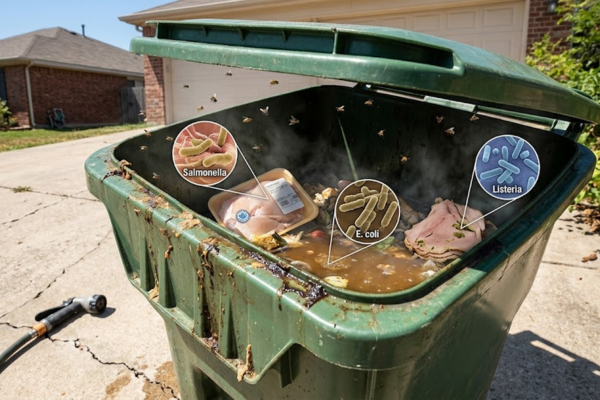
A dirty bin is more than just an eyesore or a source of bad smells; it is a sophisticated breeding ground for microscopic pathogens. When food scraps mix with heat and moisture—especially in the intense Central Texas climate—your bin becomes a biological factory.
Here are the five most common bacteria currently lurking in your trash can and why they pose a genuine risk to your family’s health.
1. Salmonella
Most people associate Salmonella with undercooked chicken, but it is one of the most resilient bacteria found in residential waste. When you toss out raw meat packaging or eggshells, Salmonella can survive and multiply on the surface of your bin for weeks. It is easily transferred to your hands or tracked into the house by pets and pests.
2. Escherichia coli (E. coli)
E. coli is a frequent inhabitant of trash bins, often introduced through contaminated food waste or used diapers. Exposure can lead to severe abdominal cramps and respiratory illnesses. Because E. coli thrives in moist environments, the "trash juice" at the bottom of your bin acts as a perfect reservoir for this pathogen.
3. Listeria
Unlike many other bacteria, Listeria is particularly dangerous because it can survive at cooler temperatures but thrives when things warm up. It is often found in decaying deli meats and dairy products. For pregnant women, the elderly, and those with weakened immune systems, Listeria is a significant health concern that shouldn't be sitting ten feet from your living room.
4. Staphylococcus (Staph)
Staph bacteria are commonly found on the skin, but they find a secondary home in household waste. When you touch a contaminated bin lid and then touch a small cut on your hand, you risk an infection. These bacteria are incredibly hardy and can withstand dry conditions, making them a persistent threat in your garage.
5. Legionella
While less common than the others, Legionella can flourish in the stagnant, warm water (leachate) that pools at the bottom of bins. If you use a garden hose to "spray out" your bin, you may inadvertently create a contaminated mist. Inhaling these tiny droplets can lead to serious respiratory issues.
Why a Garden Hose Isn't a Health Solution
Many homeowners believe that a quick rinse with a garden hose and some dish soap is enough to "sanitize" their bins. The science says otherwise. Standard garden hoses use cold water and low pressure, which may move the grime around but fail to reach the 180°F to 200°F temperatures required actually to kill these specific pathogens. Furthermore, runoff from DIY cleaning often carries these bacteria into your yard, where children play, and pets roam.
Professional Sanitization: A Necessary Health Measure
Professional bin cleaning isn't a luxury; it’s a vital part of home hygiene. Our specialized equipment uses medical-grade high-temperature water and high-pressure nozzles to blast away 99.9% of bacteria, viruses, and fungal spores. We don't just make your bins smell better—we make them safe for your family to handle.
Protect Your Home: If you haven't had your bins professionally sanitized recently, you are living with a biological hazard.
Contact us today to schedule your deep-clean and breathe easier knowing your home is truly protected.
In the quiet neighborhoods of New Braunfels, we take pride in keeping our homes spotless. We scrub our countertops, bleach our bathrooms, and vacuum our floors. However, there is one major health hazard that is often overlooked, sitting just outside our kitchen door or in our garage: the trash can.
A dirty bin is more than just an eyesore or a source of bad smells; it is a sophisticated breeding ground for microscopic pathogens. When food scraps mix with heat and moisture—especially in the intense Central Texas climate—your bin becomes a biological factory.
Here are the five most common bacteria currently lurking in your trash can and why they pose a genuine risk to your family’s health.
1. Salmonella
Most people associate Salmonella with undercooked chicken, but it is one of the most resilient bacteria found in residential waste. When you toss out raw meat packaging or eggshells, Salmonella can survive and multiply on the surface of your bin for weeks. It is easily transferred to your hands or tracked into the house by pets and pests.
2. Escherichia coli (E. coli)
E. coli is a frequent inhabitant of trash bins, often introduced through contaminated food waste or used diapers. Exposure can lead to severe abdominal cramps and respiratory illnesses. Because E. coli thrives in moist environments, the "trash juice" at the bottom of your bin acts as a perfect reservoir for this pathogen.
3. Listeria
Unlike many other bacteria, Listeria is particularly dangerous because it can survive at cooler temperatures but thrives when things warm up. It is often found in decaying deli meats and dairy products. For pregnant women, the elderly, and those with weakened immune systems, Listeria is a significant health concern that shouldn't be sitting ten feet from your living room.
4. Staphylococcus (Staph)
Staph bacteria are commonly found on the skin, but they find a secondary home in household waste. When you touch a contaminated bin lid and then touch a small cut on your hand, you risk an infection. These bacteria are incredibly hardy and can withstand dry conditions, making them a persistent threat in your garage.
5. Legionella
While less common than the others, Legionella can flourish in the stagnant, warm water (leachate) that pools at the bottom of bins. If you use a garden hose to "spray out" your bin, you may inadvertently create a contaminated mist. Inhaling these tiny droplets can lead to serious respiratory issues.
Why a Garden Hose Isn't a Health Solution
Many homeowners believe that a quick rinse with a garden hose and some dish soap is enough to "sanitize" their bins. The science says otherwise. Standard garden hoses use cold water and low pressure, which may move the grime around but fail to reach the 180°F to 200°F temperatures required actually to kill these specific pathogens. Furthermore, runoff from DIY cleaning often carries these bacteria into your yard, where children play, and pets roam.
Professional Sanitization: A Necessary Health Measure
Professional bin cleaning isn't a luxury; it’s a vital part of home hygiene. Our specialized equipment uses medical-grade high-temperature water and high-pressure nozzles to blast away 99.9% of bacteria, viruses, and fungal spores. We don't just make your bins smell better—we make them safe for your family to handle.
Protect Your Home: If you haven't had your bins professionally sanitized recently, you are living with a biological hazard.
Contact us today to schedule your deep-clean and breathe easier knowing your home is truly protected.